
PID Risk Identified Before Significant Power Loss
Jun 12
1 min read
Updated: Jun 16
EL diagnostics uncovered hidden degradation patterns invisible to conventional inspections, helping mitigate future revenue loss.
Project Overview
During a routine asset health assessment, Aura PV conducted a drone-based EL inspection on a utility-scale solar facility utilizing high-efficiency photovoltaic modules.
The inspection was performed to evaluate hidden degradation mechanisms that could not be detected through conventional O&M practices.
The Challenge
Potential Induced Degradation (PID) remains one of the most significant risks affecting modern PV technologies, including PERC, TOPCon, and HJT modules.
Many facilities experience performance degradation during the first few years of operation without visible warning signs.
Traditional inspections frequently fail to identify PID until substantial energy losses have already occurred.
Key Findings
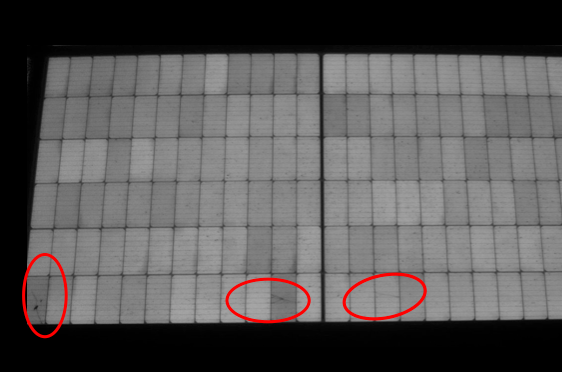
EL imaging revealed:
Non-uniform cell brightness
Electrical shunting patterns
Early-stage degradation signatures
These indicators were consistent with developing PID-related performance loss.
The affected modules appeared visually normal and showed no obvious thermal anomalies.
Business Impact
By identifying the issue early, the owner was able to:
Investigate root causes before widespread degradation
Implement targeted corrective actions
Reduce future energy losses
Improve long-term system reliability

Comments